
News and Tools for Happiness, Love, and Wisdom
Volume 19.6• December 2025
In This Issue
Sensing the Ground
© 2025 John Prendergast, PhD
Adapted from Your Deepest Ground: A Guide to Embodied Spirituality by John Prendergast, PhD.
Reprinted with permission from Sounds True.
We all have a subtle yet profound pull to live more from our hearts—our center of love, compassion, gratitude, freedom, and silent wisdom—and less from our heads, the primary source of our critical judgments and core limiting beliefs. Yet to live a truly heart-centered life, we must feel safe. As a result, to live from the heart in a deep and steady way, we must take the time to discover our deepest ground.
I have been exploring the relationship between the heart and the ground for decades, both as a depth psychotherapist, now retired, and as a spiritual teacher. I once thought I could write a single book about both, but I found that the richness of each subject deserved books of their own. I’ve devoted chapters to the theme of the ground in my previous books In Touch and The Deep Heart, but here I’ve taken the space to fully unpack this critically important subject.
Why is the ground— the felt- sense of spacious stability in and beneath the body— so important? In my experience, it is where most spiritual explorers, both beginners and veterans, get stuck, often unknowingly. The ground is largely terra incognita, an unknown territory. There is enormous resistance to exploring it. Why? As in the fanciful maps made by early ocean explorers, there may be dragons there. What are these apparent dragons that hold us back from fully landing right here in the middle of our beautiful, challenging, and poignant lives and opening to what is? Survival fear and confusion. We are deeply wired to survive, and we are deeply confused about where our essential safety lies.
Survival fear— the instinctual fear of physical and psychological annihilation— takes many forms, but mostly it draws on our desire to control what we cannot: ourselves, others, and the world. We fear the loss of this illusory control and live with a chronic inner grip of tension, losing touch with our bodies and overly relying on our thinking. We cling to the familiar and avoid the unknown. We believe untrue and unkind stories about ourselves and the world. We try to connect to and belong with others in ways that are superficial and unfulfilling, projecting both our dark and luminous shadows onto others. Above all, we forget who we are and take ourselves to be separate from the whole of life. As a result, we live inauthentically, out of integrity with the depths of who we really are. This leaves an inner ache and sense of lack.

Further, most religious and spiritual traditions reinforce our resistance to opening to the ground and experientially facing our survival fears. Most of these traditions focus on the upper half of the body and accent developing the mind or the heart area. The lower half of the body, with its instinctual tendencies of survival, sex, and power, is largely devalued or ignored. There is, however, a growing recognition in contemplative spiritual circles that the region of the belly must be included if we are to authentically embody our spiritual under-standing so that it enhances our relationships, work, and care for the planet, the latter of which is in increasingly dire straits. This brings us to the theme of the hara, which means “belly” in Japanese.
The hara, or gut, ranges from the solar plexus to the base of the spine. When I first contemplated writing this book, I thought it would be about the hara as a whole, which is described in Taoism and Japanese martial arts such as aikido. But I soon realized that it was actually the lowest level of the hara— the base of the spine— that was my real focus. In terms of the body, this is where terror localizes. This is where it feels like the rug gets pulled out from under us. This is where we either connect to or cut off from our sense of the ground.
The ground is our felt- sense of support and stability that lies beneath the body, and therefore our deepest ground is underground. There are different levels to this sense of being grounded. On one level— the most obvious one— we feel rooted in and connected to the earth. Our bodies are earth- bodies, and we are able to feel this earthy connection. Another level, less frequented, is archetypal. Here we may be pulled down into an underground realm on a mythic journey or contact ancestral conditioning. Shamanistic rituals, vision quests, extraordinary dreams, and plant medicine can sometimes induce contact with this powerful realm. There is a deeper level yet: the ground of being or the groundless ground. Here we surrender to unbounded openness and discover that, in this space, questions of safety or unsafety completely dissolve. When we open to our deepest ground, we encounter an unshakable sense of well- being regardless of circumstances. And our heart, now deeply grounded, is able to fully flower like a lotus with its roots deeply anchored in the mud. We feel in deep integrity with ourself.

There is also a false ground, the ground of the apparent separate self or “little me.” This ground is a contraction, a frozen place, much like a thin layer of ice over a body of water. As a separate self, we can sometimes sense that we are skating on this thin ice. This false ground is a chronic grip of inner tension that defends against opening to our true ground. It is a bundle of false beliefs, reactive feelings, and somatic contractions that we mistake to be ourself. We unconsciously cling to it because it is familiar, choosing a known suffering over an unknown openness. As a result, we assume that, except for brief respites, feeling anxious, depressed, alienated, and disconnected is all that life offers. We habituate to feeling separate and inwardly contracted. Finding our true ground requires that we see through this false ground. Seeing through what is false allows a spontaneous letting go and unfolding of what is true.
My approach to the ground may be surprising to some since it includes dimensions that are not usually included or combined. It involves a blend of contemporary depth psychotherapy, energetic sensitivity, and nondual understanding based upon direct experience. In my view, at least one of these important dimensions often gets left out of teachings about spiritual development. My psychotherapeutic understanding comes from over four decades of practicing adult individual psychotherapy as well as from supervising and training masters- level counseling students for twenty- three years. My energetic sensitivity first emerged in late boyhood and blossomed once I began a regular meditation practice and started working with clients. My nondual understanding unfolded after many years of meditation and self- inquiry and was catalyzed by years of close study, first with the European sage Jean Klein and then with the American spiritual teacher Adyashanti.
In order to have an initial felt-sense of the ground, I invite you to try the following guided meditation. Be sure to allow plenty of time between each step. (Consider having someone slowly read it to you or, alternatively, recording this meditation in your own voice with appropriate pauses on your smartphone.)
Meditation: Sensing the Ground
Find a quiet place where you won’t be disturbed. If possible, sit comfortably upright with your feet on the floor or your legs comfortably folded. Otherwise, find a comfortable relaxed position.
Close your eyes or leave them slightly open and take several deep, slow breaths.
Begin by reminding yourself that there is nothing to fix or change in your current experience, and there is nothing to achieve for the next few minutes. It is enough to simply be as you are.
Allow your attention to settle down and into the core of your body as you breathe. This will happen naturally as your mind realizes it has no work to do.
Feel the weight of your body being held by whatever you are sitting upon. Relax into the sense of being physically held.
Bring your attention to your breath and imagine that you can inhale and exhale directly from the ground beneath your body.

Allow your exhalation to completely empty out into the underground space. Wait for the inhalation from the depths of the ground to come on its own.
As you exhale, feel how open this underground space actually is.
Continue to sit for at least ten minutes, sensing into this underground space as you breathe. If your attention wanders, simply bring it back to your grounding breath.
When you’re finished with your practice, slowly open your eyes and rest for a minute or two before getting up. Take note of how it feels to be in touch with the ground before you reenter your activity.
Coming into Integrity
Why is becoming aware of our ground so important? It is a matter of integrity. If we are honest with ourselves, we are more willing to face and lean into where our life is not in alignment with our deepest knowing, not in order to have a shinier image of ourselves but to embody our spiritual understanding. There is a primal desire in all of us to be more authentic. There is also a desire to be a clear and loving servant of the whole. The two are linked, for the more truly authentic we are, the more we are naturally in service to a life beyond our egocentricity. This will look different for each of us. Whether we are tending our local garden of relationships or sharing on a communal level, we will be moved by a grounded love and wisdom when we stand in our integrity. The effect will always be benevolent.
May you be peaceful, happy, deeply at ease, and filled with gratitude. May you spontaneously and generously share this embodied understanding with those around you. And may you take care of this precious blue jewel of a planet for the generations of beings, human and otherwise, that follow.
ABOUT THE AUTHOR

John J. Prendergast, Ph.D., is the author of Your Deepest Ground, The Deep Heart, and In Touch, as well as the senior editor of The Sacred Mirror and Listening from the Heart of Silence. He is a retired Adjunct Professor of Psychology at the California Institute of Integral Studies where he taught masters level counseling students for 23 years. He was a psychotherapist in private practice for 34 years before retiring in 2020. He studied for many years with the European sage, Dr. Jean Klein, as well as with the American spiritual teacher Adyashanti, who invited John to teach in 2023. John offers residential retreats in the U.S. and Europe with his wife Christiane. Please see www.listeningfromsilence.com for more information.
The Golden Wind
© 2025 Thomas Rain Crowe
“and the body exposed to the golden wind.”
--Zen Buddhism
T ime moving like a river and from the mountain I
H ear the autumn wind flowing like
E nlightenment moving from the
G round to open air, letting go
O f mind that matters more than
L ove and becomes what change
D oes when I awake and rub sleep from my eyes
E ven after awkward dreams that
N ever seem clear or in the present tense. So
W ho am I in this mind and body that
I nisists on being only “me” in the
N ow of this golden light that shines
D own on my youth from above
like the blonde in my four-year-old hair.
ABOUT THE AUTHOR

Thomas Rain Crowe is an internationally-published and recognized author, editor and translator of more than thirty books, including the multi-award winning nonfiction nature memoir Zoro’s Field: My Life in the Appalachian Woods (2005) ; an internationally acclaimed anthology of contemporary Celtic language poets entitled Writing the Wind: A Celtic Resurgence (The New Celtic Poetry); his collection of poetry The Laugharne Poems written at the Dylan Thomas boathouse in Laugharne, Wales in 1993 and 1995. He lives in the Great Smoky Mountains of North Carolina.
The Quiet Power of Equanimity in an Age of Outrage
© 2025 Margaret Cullen, MFT
In a time when corruption no longer hides its face and political violence is becoming routine, outrage has become the default language of public life. Equanimity may seem irrelevant—or worse, complicit. What kind of person stays calm in the face of injustice? Who, in their right mind, resists the pull toward righteous indignation when world leaders violate every essential norm of human decency?
And yet, I’d like to suggest something quietly radical: that equanimity, rightly understood, is not passivity—but resistance. A deeper kind of resistance. One that refuses to be hijacked by the very forces it seeks to oppose.
A few months ago, I met john a. powell (who does not capitalize the letters of his name) at a backyard get-together. Given his position as Director of the Institute for Othering and Belonging at UC Berkeley and as a prominent voice for equity, I expected our conversation—centered on funding cuts and Department of Justice investigations into colleagues at UC Berkeley—to be tinged with shared outrage. But john didn’t meet my indignation with more fire. He simply smiled—a true “Duchenne” smile—and said, “I just stick to my values.”
That sentence has echoed in me ever since.
It clarified something I had only been circling: that equanimity is an act of resistance, an assertion of dignity. It is the quiet refusal to be swept up in the emotional hyper-reactivity that so often masquerades as moral clarity. It is not indifference—it is passion tempered with wisdom. Not detachment—but perspective.
Outrage and the illusion of clarity
Outrage feels good, at least at first. It is hot, energizing, thrilling. It releases adrenaline, cortisol, testosterone—priming us to argue, dominate, and act.

But it comes at a cost. Physiologically, outrage taxes our bodies. Cognitively, it narrows our perception, distorting what we see and hear and what we believe about others. When I’m in the grip of anger or indignation—at a partner, a public figure, or the world—I lose the ability to see nuance. I see enemies instead of people. I lose the thread of complexity and collapse into monovision.
Outrage can easily become its own kind of addiction, a self-reinforcing loop where the more morally outraged we are, the more righteous we feel. In places like Berkeley, where I live, this has become a kind of social currency—a way of signaling virtue and belonging. But what does it accomplish?
Too often, righteous indignation calcifies into zealotry: the fanatical, uncompromising pursuit of our ideals. History shows us where that leads—violence, exclusion, contempt. And here’s the hardest part to swallow: in our most indignant moments, we can begin to enact the very qualities we’re condemning in others. The same absolutism. The same disdain for difference. The same dehumanization. The same blind certainty.
Equanimity as moral resistance
So what makes us vulnerable to the kind of anger that slips into contempt or even cruelty? For me, it often begins in shame.
When I reflect honestly, I notice that my most volatile reactions are tied to things I hate in myself—places I’ve missed the mark or failed to live up to my own ideals. Outrage becomes a shield, a projection, a way of disowning what is hard to face internally. There is little that is harder than facing the parts of myself that in any way resemble our current president.
It is far easier to condemn greed, narcissism, contempt, and cruelty in the abstract than to look at the ways they show up in my own life. Easier to demonize the other than to wrestle with my own complicity. And yet, this is where equanimity can begin—not in superiority, but in humbleness.
To me, equanimity is not apathy. It is not a flattening of emotion or a retreat from the world. Rather, it is the ability to stay rooted in our values while engaging with the world as it is. john powell reminded me of this with his Duchenne smile. Equanimity, he reminded me, is not a cop out—it is a necessity in times of moral collapse.
When outrage becomes habitual, it becomes ineffective and draining. Even outrage can become complacent—performative rather than sincere. But equanimity, especially when paired with courage and clarity, becomes a platform for more skillful and enduring forms of action. It allows us to see more clearly, speak more effectively, and love more fiercely.
When I imagine doubling down on my own integrity—not as withdrawal, but as resistance—I feel the ground of equanimity beneath me. It doesn’t make me passive. It makes me effective.
The work ahead
Toward the end of my upcoming book on equanimity, I have a chapter on connecting the dots between living an ethical life and finding equanimity. I share some deeply personal stories about learning—usually the hard way—how my own unethical behavior gave rise to anxiety and agitation. The link between the two is unmistakable, and nowhere is it more apparent than when you sit down to meditate.
Simply put: unethical conduct breeds agitation; ethical conduct fosters peace. And agitation is fertile ground for outrage and projection to take root. Throw in some social media and global instability and you are well on your way to zealotry. Peace is fertile ground for perspective and clarity to grow. Toss in some honest self-reflection and an intention for greater integrity and you can harness the energy of outrage towards creative solutions and effective engagement.
The world doesn’t need more anger. It doesn’t need more contempt, or more zealotry, however righteous. It needs people who can hold the fire of moral clarity without burning others to the ground. It needs people who can stay close to suffering without becoming consumed by it. It needs people who can see clearly without collapsing into cynicism or despair.
It needs, perhaps, more equanimity—not as escape, but as a radical refusal to be consumed by the very forces we seek to confront. When the fires rise, and the outrage surges, ask yourself this: Can I stick to my values without succumbing to the dopamine rush of indignation? Can I stay awake and engaged—without becoming what I oppose?
That, I believe, is the quiet power of equanimity.
ABOUT THE AUTHOR

Margaret Cullen is an author, a licensed psychotherapist, and a meditation practitioner with over 45 years of experience. A pioneer in bringing contemplative practices into mainstream settings, she has co-developed the Compassion Cultivation Training, the Mindfulness-Based Attention Training for military spouses, and is the founder of Compassion Corps. She is coauthor of The Mindfulness-Based Emotional Balance Workbook, a Mind and Life Institute Fellow, Founding Faculty member of the Compassion Institute and on the Advisory Board of the Global Compassion Coalition.
Concentration
© 2025 Zelana Montminy
I still remember one September morning when I opened my calendar and felt my chest tighten. Soccer practices, carpool rotations, work deadlines, parent nights all stacked into color-coded blocks. It felt like summer had ended overnight, and suddenly the rhythm of my days was dictated by alarms and alerts.
Fall used to feel like fresh notebooks and new beginnings. Now it feels like a shock to the system, the lazy fluidity of summer replaced with deadlines, early alarms, and the pressure to get “back on track.” My brain, still craving long evenings and slower mornings, couldn’t seem to catch up. My focus wasn’t gone; it was just scattered in a thousand directions.
Concentration is a superpower, one of the core ingredients of focus, and it’s also a skill that we can build and deepen. Fortunately, it’s trainable. As mentioned earlier, concentration, also known as sustained attention, enables us to control our attention and direct it toward something (a person, an activity, a thought) for a continued period of time.

The key to concentration is maintaining the spotlight of our attention on one task over time and resisting the elements that call from the darkness and threaten to throw us off track. This is not easy in a world that beckons and interrupts us at every moment. According to a 2015 study from Microsoft, our average attention span is just eight seconds. That’s down from twelve seconds in the year 2000 and, as an article in Time magazine proclaimed, one second less than the attention span of a goldfish. It’s especially difficult to concentrate when we are surrounded by digital screens.
The good news is that research has shown that concentration can be strengthened. There are also multiple ways to limit the distractions in our environment that test our concentration in the first place. This two-pronged approach will go a long way to increasing your powers of concentration.
INCREASING YOUR CONCENTRATION
Many of us are not used to concentrating for any significant duration of time, so this can make it uncomfortable to do and creates an additional barrier. Within moments of beginning to concentrate, we feel fidgety, anxious, and in need of distraction. This can be driven in part by the following factors:

- Information Overload: We’re bombarded with information from various sources, overloading our cognitive system and making it harder to prioritize and filter, leading to mental fatigue.
- Underlying Conditions: Anxiety and sleep deprivation can significantly impact concentration and focus, amplifying the discomfort and anxiety associated with sustained focus. Neurodivergent people can also experience increased difficulty with concentration.
- Negative Emotions: The anticipation of boredom or discomfort associated with focusing on a task can trigger a desire to escape. This creates a negative feedback loop that makes it harder to stay focused.
- Digital Addiction: Smartphones, social media, and constant notifications create easily accessible escape routes. The constant dopamine rush triggered by each new distraction can be more alluring than the slower reward of sustained focus.
- Fear of Missing Out (FOMO): The endless awareness of what’s happening online or wondering what our coworkers are chatting about can fuel anxiety and make it harder to stay absorbed in any one task. We feel the need to be constantly engaged and fear missing out on something important.
We can see what we’re up against whenever we try to concentrate for an extended period. But our brains are adaptable, and we can certainly relearn this skill. Next we’ll explore a variety of ways to do so.
Training to Stretch Your Concentration Muscle
It can be helpful to begin small and grow the length of time that we can sustain our attention. Try the following techniques to begin the process:
- Set an alarm for five minutes and commit to staying on task for that long, no matter what (within reason, of course). Once you’ve accomplished a five-minute stretch with ease, you can raise the bar to seven minutes and then ten, until you feel comfortable with longer periods of time. It may be difficult at first, so be easy on yourself. You’re retraining your brain, and it will take time.
- Some people like to use the Pomodoro Technique, a time management tool developed in 1987 by an Italian university student, Francesco Cirillo. In this method, you set a timer for twenty-five minutes and work on a task until the alarm rings. Then you take a short break of two to five minutes before starting over. Pomodoro means “tomato” in Italian, and the method was named after the tomato-shaped kitchen timer that Cirillo used. He recommends that people use an old-fashioned timer, as he believes that manually winding the timer, hearing the device ticking, and anticipating the loud ringer all help with goal completion. However, if this technique appeals to you, you can use whatever works for you. This method is an example of “timeboxing.”
- Read some long-form material, such as articles and books. When we’re accustomed to watching short videos or taking in bite-size pieces of prose, it can be mentally exhausting to even contemplate reading an article of several thousand words. But being able to do so will increase your capacity to concentrate. Find a topic you’re interested in before diving in, or choose some lighter fiction or narrative nonfiction if it has been some time since you’ve taxed your brain in this way.
- Some people find it easier to concentrate fully when they read physical books or magazines rather than potentially distracting screens. One friend of mine recently subscribed to several magazines and now looks forward to reading at least part of an article away from her desk and her phone during her lunch hour. If you prefer reading online, you might enjoy www.longreads.com, a website dedicated to sharing long-form nonfiction storytelling.
- Try the Feynman technique, a learning method developed by the Nobel Prize–winning physicist Richard Feynman, which forces us to really engage our brains and assess whether we truly know something. After learning about a topic, practice distilling your knowledge and reexamine it until you can teach it to yourself, or someone else, using concise and simple language. You may have to return to your source information or your notes, especially after teaching it to someone else who might have questions for you. Even simply asking yourself, “How would I explain this to someone else?” while reading or exploring a new topic can be a powerful tool to deepen your concentration. This method requires us to pay attention while learning a topic and then to sustain this attention while actively refining our knowledge. This capacity to concentrate at each stage increases our concentration overall.


Take Your Brain to the Gym!
You’ve probably heard the expression, “Your brain is a muscle.” It’s one that I like to use to emphasize the importance of exercising our brains, just like our bodies, to keep them in optimal shape. And while the brain, strictly speaking, is an organ, not a muscle, it does benefit greatly from workouts. When we use our brains in a challenging, focused, and sustained way, new neuronal connections are made and cognition strengthens—including our concentration levels—in much the same way that muscles do after physical exercise.

Here are some options for brain training:
- Word games, crossword puzzles, Scrabble
- Counting and math games such as sudoku
- Jigsaw puzzles
- Chess, backgammon, card games
- Commercially available brain-training programs
such as BrainHQ, designed by neuroscientist Dr. Mike Merzenich, or Luminosity, Peak, Elevate, CogniFit, Happy Neuron, and Braingle
Bring on the Music
If you’re like me, you may listen to music when you’re driving, working out, or cooking. Maybe you use it to motivate yourself, to boost or calm your mood, or because you feel like dancing.
But you probably don’t use it to exercise your brain. And yet whenever we listen to music, we put our brains through an intensive workout, activating almost all the brain’s many regions and networks as we make sense of musical components such as harmony, melody, pitch, rhythm, timbre, and tempo. Music is all about the relationships between one note and the next and figuring it out takes a lot of brainpower. While listening to music is good for the brain, playing an instrument is a force multiplier, as it engages every part of the central nervous system and challenges the brain to a rigorous workout. If you think about someone playing an intricate piece on the piano, you can picture the pianist’s two hands working together and independently, navigating the eighty-eight piano keys, playing up to ten notes at a time. Imagine what is going on in the brain to facilitate that dexterity.
And there’s more! The pianist focuses on what’s coming next in the music even while attending to the present moment, switching attention between the sheet music and the fingers on the keys. The level of concentration is intense. Scientific studies have found that taking up a musical instrument can increase concentration as well as memory and problem-solving skills. In one study, a group of people in their sixties to eighties who started to learn the piano, taking one lesson a week coupled with daily practice, showed significant improvement in these areas of cognitive functioning in just four months compared to those who didn’t take lessons.
Learn the Art of Meditation
In many ways, meditation and sustained attention are similar practices. Both are mental exercises in which we attend to one thing to the exclusion of all others over an extended period of time.
In meditation, the focus could be our breathing, a word, or a phrase, known as a mantra. When attention wanders or other thoughts flood the mind, it’s time for us to redirect our minds toward the object of focus. By bringing our attention back each time we feel it straying, we strengthen the brain’s neural circuitry for focus and concentration—and we increase our awareness of the mind’s tendency to roam. Many studies show that meditating improves our ability to concentrate and increases our attention span. One recent study found that daily meditation of just thirteen minutes led to enhanced attention and working memory as well as decreased anxiety and negative mood after eight weeks. Many of us believe that meditation is not for us, as we’re convinced we won’t do it properly or think we don’t have time for it. But meditation is more accessible than you might think. Here are some ideas for bringing it into your life:
Be Open-Minded: Entertain the idea of trying meditation, just for a few minutes a day, for two weeks, and see how it goes.
- Find the Time and Space: To begin, you just need five minutes and a space where you can be alone and uninterrupted.
- Breathe: Sit in a comfortable position and focus on your breath, noticing the way air goes into and out of your body, how your body moves. If your mind wanders, bring it gently back to your breath.
- Be Kind to Yourself: Accept that you are likely to get distracted and that your thoughts will drift. This is an inevitable part of meditation—try not to be discouraged but keep going. The more you practice, the easier it will become, and the more your concentration will increase.
- Build Your Practice: Each day, extend your meditation time. Remember that just thirteen minutes a day for two months can lead to significant gains.
- Experiment: It’s important to find the right form of meditation for you so that you will be inspired to practice.
- Meditation options can include mindfulness meditation, focused meditation, guided meditation, movement meditation, loving-kindness meditation, and transcendental meditation.
- For some of us, finding a class or a teacher can provide structure and motivation. Online meditation options for beginners through experienced meditators include Insight Timer, UCLA Mindful, Headspace, Calm, and Chopra (for meditation rooted in Ayurveda).
Try a New Hobby
Our brains love learning new things, whether it’s taking the first steps in conversational Spanish or mastering the art of grilling. Our neurons fire and our brain networks expand as more neural connections are made, all leading to improved cognition and an increase in our ability to concentrate. When we begin to spend time on acquiring new knowledge, we often focus intently and avoid distractions—because we don’t want to make mistakes, and we’re not quite comfortable enough with whatever we’re learning to think we can multitask while learning it.
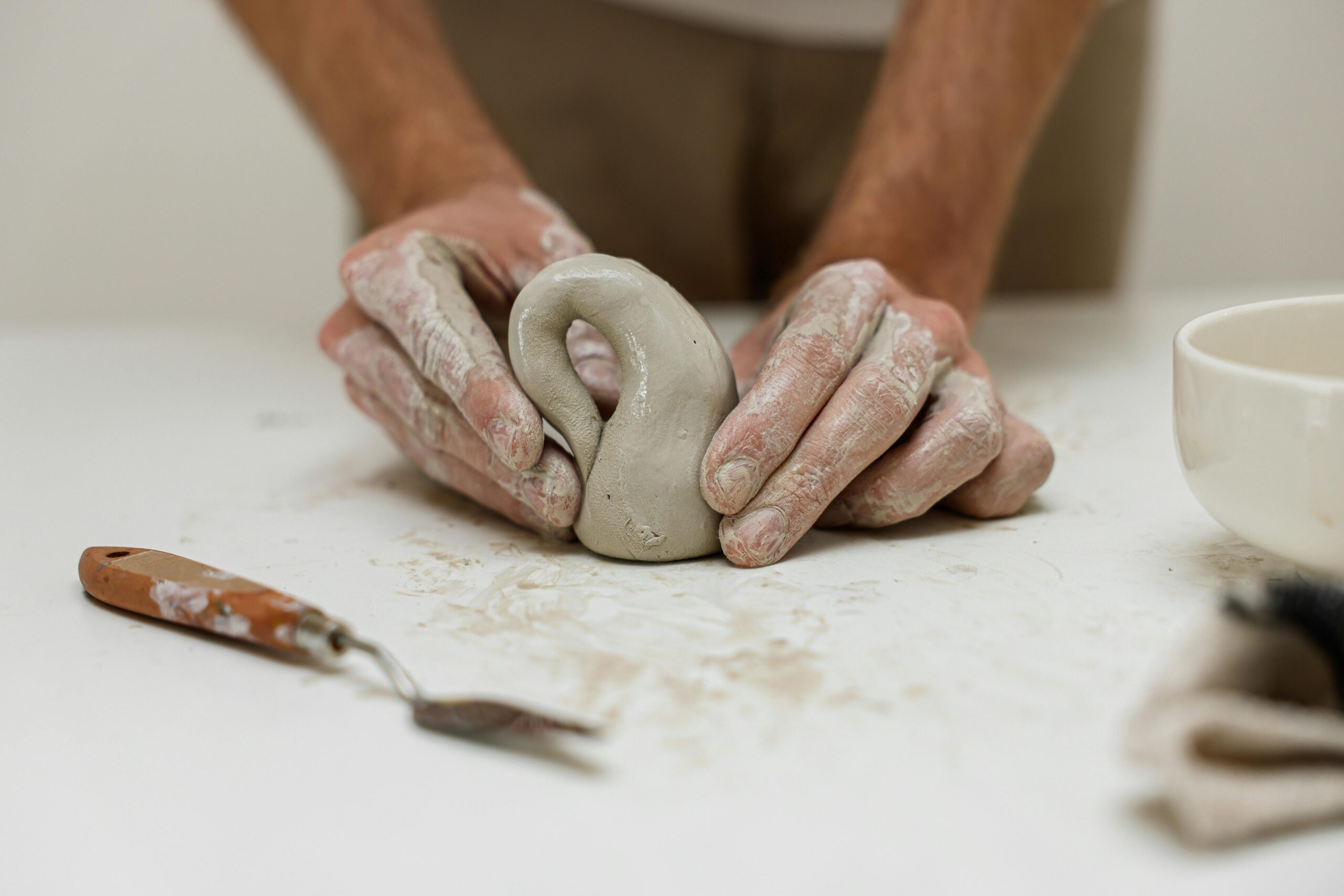
In a world in which we can be entertained 24/7 without leaving home, it can take some persuading to start a new hobby, but it’s worth pursuing. You’ll find it creates more enjoyment and happiness in your life while increasing your ability to concentrate. The challenge and reward system comes into play, too—pushing yourself to learn something new keeps your brain engaged, and successfully completing a task reinforces the positive feedback loop associated with focused effort, motivating you to improve further. Hobbies also offer a welcome break from daily pressures, reducing stress and making it easier to concentrate overall. Choosing activities you genuinely enjoy creates intrinsic motivation, making it easier to stay focused and engaged naturally.
Here are some ideas for hobbies:
- Learn a Language: You can use a language-learning app (such as Duolingo, Babbel, Rosetta Stone, and Pimsleur) and work through the lessons in just a few minutes a day. You’ll be surprised by how much you can accomplish and how it opens up new vistas of culture, cuisine, and potential travel destinations. If you think you’d do better with an in-person class, try local community centers, libraries, or colleges.
- Do Something with Your Hands: Experiment with sewing, woodwork, painting, breadmaking, or gardening—something that gets you using your mind and learning new skills. As you become more accomplished, you may find that you can carry out your hobbies without intense concentration. The time away from distractions with your mind directed toward a specific task will help grow your concentration muscle.
In the Zone
As you become more proficient in your new pastime, you will likely experience a state of intense absorption known as “flow,” a term coined by the renowned psychology professor and researcher Mihaly Csikszentmihalyi. This feeling of being in the zone or the flow is a form of concentration in which you are caught up in your experience or activity, when time no longer matters, and you are operating at a level of peak performance. It can happen during creative pursuits, sports, or even at work. Once you’ve experienced it, it’s something that you want to do again. The more your brain can associate deep concentration with pleasure, the more you will be able to engage in it.
MINIMIZING DISTRACTIONS
By intentionally strengthening your ability to pay attention for longer periods of time, you’ll notice that it’s easier to resist distractions around you and to keep your spotlight shining where you want. But, to make things a little easier, consider these ways to minimize the distractions around you.
Use Focus Tools
A slew of proven techniques and tools can help keep your attention homed in on the task at hand. First, think about what type of support you need. Are you primarily distracted by notifications from other people? Or is the issue in trying to stay off certain websites and apps more about self-control? What tends to make your mind wander? Whatever you need help with, there’s likely to be a solution for you.

Most handheld devices and laptops and other computers allow you to minimize distractions with built-in Focus Mode settings to apply filters according to your needs, perhaps blocking all notifications and calls during a certain time period or only allowing designated alerts to come through. You can set timers and create an auto-reply, alerting people that you have notifications silenced—so they know you’re not ignoring them! You can experiment with options and see what works best for you.
While these methods can minimize external distractions, they won’t stop your own urges to check your messages or take a quick dive through your social media. Some people like to use apps that block a list of websites and/or apps (determined by you) for a certain amount of time to discourage jumping ship from tasks and following the siren song of distraction. In general, the best apps of this kind are annoying and a little time-consuming to disable—which is good, because it means that you’ll be dissuaded from doing so. They include Freedom, Cold Turkey Blocker, Forest (which motivates you to put down your phone and grow a tree), Focus, and Self Control, but you may find others that are helpful.
Music and Noise Filters
Noise, whether it’s people talking or dogs barking, can be an impediment to our concentration levels, and some people use music—or other sounds—to stay on track. It may seem counterintuitive as music may seem like it could be a distraction itself, but it all depends on the kind of music and the person listening. I have a writer friend who listens to “brain music” when she works, as it blocks out background noise and distracting thoughts while allowing her to keep her focus on her words. She also believes that over time she has trained her brain to recognize that it’s time to gear up and write whenever she plays this particular music. You could experiment with different kinds of music to see how your concentration is affected, whether for better or worse.

Some people listen to nature sounds, binaural beats, or white or brown noise to block out background noise. Even if you don’t find sound helpful to you, a pair of noise-canceling headphones may be useful—even if it’s just to signal to other people that you are busy and interruptions will not be welcomed.
In the end, concentration is both a science and an art, a blend of neural pathways strengthened through repetition and the quiet intention to return, again and again, to what matters. Each time we resist distraction, we reinforce the circuits of focus, building mental endurance much like a muscle that grows through steady effort. But concentration is also deeply human, an invitation to be present in our own lives. When we choose to give something our full attention—a conversation, a melody, a page of text—we honor it with our presence. Over time, this practice not only sharpens our minds but deepens our sense of calm, connection, and meaning.
ABOUT THE AUTHOR

Dr. Zelana Montminy is a behavioral scientist and bestselling author whose work explores the intersection of mental health, attention, and modern disruption. With a focus on resilience, mental health, and human potential, Dr. Montminy is transforming how individuals and organizations navigate the modern world of constant distractions and rising stress.
Drawing from the latest research in behavioral science and psychology, Dr. Montminy offers practical, actionable strategies for thriving in an ever-evolving world. Her expertise is sought after by industry leaders—from Fortune 500 giants like American Express, Coca-Cola, and Estée Lauder, to academic institutions such as UCLA and nonprofits including the Drug Enforcement Agency and Big Brothers Big Sisters.
Dr. Montminy’s expertise is rooted in a holistic approach to well-being. She integrates advanced training in nutrition (including certifications from Cornell University) with her extensive background in clinical psychology. This combined knowledge allows her to provide a comprehensive perspective on health—one that nurtures the mind, body, and spirit.
Her first book, 21 Days to Resilience (HarperCollins), offers a structured, science-backed pathway to mental strength and well-being. Her new book, Finding Focus: Own Your Attention in the Age of Distraction (Hachette, September 16), takes a deep dive into how to regain control over our most valuable resource: our attention. In a world full of distractions, Dr. Montminy provides a holistic, science-backed roadmap to reclaim focus by addressing the root causes of distraction.
Skillful Means : Earth Descent Meditation
Your Skillful Means, sponsored by the Wellspring Institute, is designed to be a comprehensive resource for people interested in personal growth, overcoming inner obstacles, being helpful to others, and expanding consciousness. It includes instructions in everything from common psychological tools for dealing with negative self talk, to physical exercises for opening the body and clearing the mind, to meditation techniques for clarifying inner experience and connecting to deeper aspects of awareness, and much more.
Earth Descent Meditation
PURPOSE/EFFECTS
This is a powerful way to get grounded and in touch with your higher, deeper Self.
METHOD
Summary
Visualize your awareness dropping deep within the Earth.
Long Version
- Lay on your back in a comfortable position. You may wish to have your knees up and your feet flat on the ground, to relieve tension in the lower back.
- Close your eyes. Breath deeply. Just concentrate on your breath and relax for a few moments. On each in-breath, notice any tension in the body. On each out-breath, allow all the tension in your body to drain away into the Earth. Let it dissolve into the ground beneath you.
- Now allow your awareness to drop down into the Earth. Feel your consciousness sinking into the ground beneath you.
- Allow your awareness to drop down about 1 foot. Imagine that you have roots that go down into the ground. Feel the roots.
- Next, allow your consciousness to drop down 10 feet into the Earth. Imagine that the roots of your being go way down in the ground. Feel the strength, solidity, and warmth of the Earth.
- 200 feet. Keep falling into the earth. 300, 400, etc.
- 1000 feet. Keep falling into the earth. 2000, 3000, 4000, etc.
- Now, allow your consciousness to drop down a mile into the Earth. Let go of any resistances or blockages. Open your awareness to this depth.
- With each breath allow your consciousness to drop down another 10 miles into the Earth, until you reach 100 miles. You are way down into the earth now.
- Now let your awareness simply fall, deeper and deeper, farther and farther. If you run into any barrier or feeling that you can’t fall any further, just let go of that and fall right through it. Keep falling deeper and deeper.
- Even though the physical Earth has a limited depth, the depth of this experiential Earth goes to infinity. Allow yourself to fall, or be pulled toward, the infinite depth of the Earth. Think of this infinite depth as the source or origin of all things. This is your true home.
- Keep falling, pulled onward by your desire and longing for your true home, the source of being. Keep opening, letting go of any resistance, keep descending.
- Feel your body in contact with the naked, infinite depth of the Earth. Your body is getting extremely relaxed down here.
- Now just hang out at the point of infinity beneath you. Let go of any ideas. Just be the infinity beneath you. Let go of any effort. Feel total relaxation.
- Notice how your mind feels here. Completely open. Boundless. Without barriers, restrictions, or boundaries.
HISTORY
This technique was created by the Buddhist teacher Reginald Ray, drawing upon indigenous sources. See the audio series Your Breathing Body.
NOTES
R. Ray makes the point that human awareness is only apparently bound within the boundary. He says that, according to Tibetan Buddhism, human awareness occupies all of space, and all of time. Sometimes this is also called “Earth Breathing.”
SEE ALSO
What Is Meditation?
Meditation Posture
EXTERNAL LINKS
Reginald Ray - Dharma Ocean