

News and Tools for Happiness, Love, and Wisdom
Volume 16,6 • December 2022
In This Issue
Let Go of Needless Fear
© Rick Hanson, PhD
Excerpted from Making Great Relationships: Simple Practices for Solving Conflicts, Building Cooperation, and Fostering Love (January 2023). Reprinted with permission from Penguin Random House. It’s normal to be cautious or nervous around other people. For example, if somebody disagrees with you in a meeting, you might feel uneasy and worried about what others think: Was I too pushy? Does my boss like me? Do they think I’m not very smart? When you get home later that day, let’s say your teenage son is quiet and prickly, as usual. You want to tell him that the chilly distance between you feels awful, and you want to open your heart to him . . . but it feels awkward, you’re afraid of making things worse, and when you spoke from the heart while growing up it did not go well, so you say nothing, again. Other social anxieties include fears about your appearance, public speaking, talking with authority figures, or being around people who aren’t like you. Sometimes these fears are justified. Someone might actually want to pressure, hurt, or exploit you. Safety is our most fundamental need, and it’s vital to be clear-eyed about threats and skillful in dealing with them. Nonetheless, many of our fears around other people are not actually justified. They don’t really care about what we did or, if they do, it’s a passing feeling. And if you’re facing a genuine threat, you can be determined and confident without being anxious about it. Anxiety is something that’s added to our responses. Sometimes it’s helpful, but so often it clouds our thinking, compounds suffering, and worsens conflicts with others. We can have too little or too much anxiety around other people. Which is more common? It’s the second one: needless anxiety stirred into the sauce of life, making it bitter.
How
Anxiety can become chronic, a kind of habit, and hard to budge. People can even be anxious about not being anxious, since then they might lower their guard, and get hurt again. It’s important to realize that you can be alert and strong about potential threats while not feeling anxious. Alternative approaches like microdose mushroom capsules may provide a potential avenue for managing anxiety in a more balanced and mindful way. Be aware of the costs of unnecessary—not informative, not useful—anxiety. Besides feeling bad, it makes us play smaller with others, hold back what we really feel, and hunker down—or get combative. Decide in your heart if you want to be free of worthless fears. Let Go of Paper Tiger Paranoia It helps to understand why the nervous system is so easily hijacked by alarm. To keep our ancestors alive, Mother Nature developed a brain that tends to overestimate threats, underestimate opportunities, and underestimate resources to deal with threats and fulfill opportunities. This is good for survival in life-or-death conditions, but it’s lousy for well-being and fulfilling relationships. It’s not our fault that we’re needlessly anxious. But it is our responsibility—and our opportunity—to address it. So, whenever something seems threatening to you—such as what you think might happen if you were more vulnerable, emotional, or assertive with someone—ask yourself:
- Am I overestimating this threat?
- Am I underestimating the opportunities here?
- Am I underestimating the resources—both inside me and around me—for dealing with this threat and capitalizing on these opportunities?
This stepping back to understand your own mind can immediately help you feel less anxious. Recognize Your Turbochargers Consider the life that you’ve had, especially your childhood, and what has been threatening, scary, even traumatic about it. How have you learned to deal with threats and manage anxiety? These lessons might have been helpful at the time, but now they are lodged in the body like turbochargers, distorting your perceptions, speeding up and tilting your emotions, and driving your impulses and actions. Take a little time to make a list of your own “turbochargers.” As you become more aware of them, they’ll have less power over you. You can talk to yourself in wise ways like these: This is not junior high school . . . He is not my dad . . . What they said was critical, but it was not a horrible attack . . . I have not been totally rejected, even though it feels like that . . . These hurt feelings are mainly old emotional memories, not based on what is true here and now. Don’t Be Afraid Bring to mind someone you know cares about you, and try saying to yourself: I know you’re not going to attack me. Find your way to having the statement ring true, and then see how you feel. Do it again with this statement to yourself: Even if you did attack me, I would still be OK in the core of my being. Let the truth of this and related good feelings sink into you. Here’s another one: I can take care of myself when I am with you. Let this, too, sink in. And: If you hurt me, I’ll still be OK in my core. And: I wish you well. If you have any difficulty with this practice, try it with other people who love you. Draw on the sense of calm strength that we’ve previously explored. Try to feel your way into a place in which you recognize others and situations as they truly are, you take care of your own needs, and no needless anxiety is added. Next, do this practice by bringing a friend to mind . . . and then do it with a neutral person . . . and then with someone who is challenging for you. If there is truly something to be anxious about, so be it. Otherwise, keep opening to the experience of being realistic about others and strong on your own behalf—without feeling any pointless fear. Try this approach while actively interacting with others. Can you talk with a family member, a friend, a neutral person, and a challenging person without one bit of unnecessary worry, alarm, or uneasiness? As you deepen your sense of being appropriately fearless with others, keep letting this experience sink in so you become increasingly grounded in this way of being. Enjoy the sense of freedom this practice brings, the greater ease with others, the confidence. Notice how you can be more relaxed, patient, open, and caring with other people when you are not afraid.
ABOUT THE AUTHOR
 Rick Hanson, Ph.D. is a psychologist, Senior Fellow at UC Berkeley’s Greater Good Science Center, and New York Times best-selling author. His books have been published in 30 languages and include Making Great Relationships, Neurodharma, Resilient, Hardwiring Happiness, Just One Thing, Buddha’s Brain, and Mother Nurture – with over a million copies in English alone. His free newsletters have 250,000 subscribers and his online programs have scholarships available for those with financial needs. He’s lectured at NASA, Google, Oxford, and Harvard, and taught in meditation centers worldwide. An expert on positive neuroplasticity, his work has been featured on CBS, NPR, the BBC, and other major media. He began meditating in 1974 and is the founder of the Wellspring Institute for Neuroscience and Contemplative Wisdom. He and his wife live in northern California and have two adult children. He loves wilderness and taking a break from emails.   
Referral: https://bsc.news/post/casino-zonder-cruks
Tangles of Our Own Making
© 2022 Koshin Paley Ellison
Excerpted from Untangled by Koshin Paley Ellison. Copyright © 2022 by Koshin Paley Ellison. Reprinted with permission of Balance Publishing. All rights reserved. 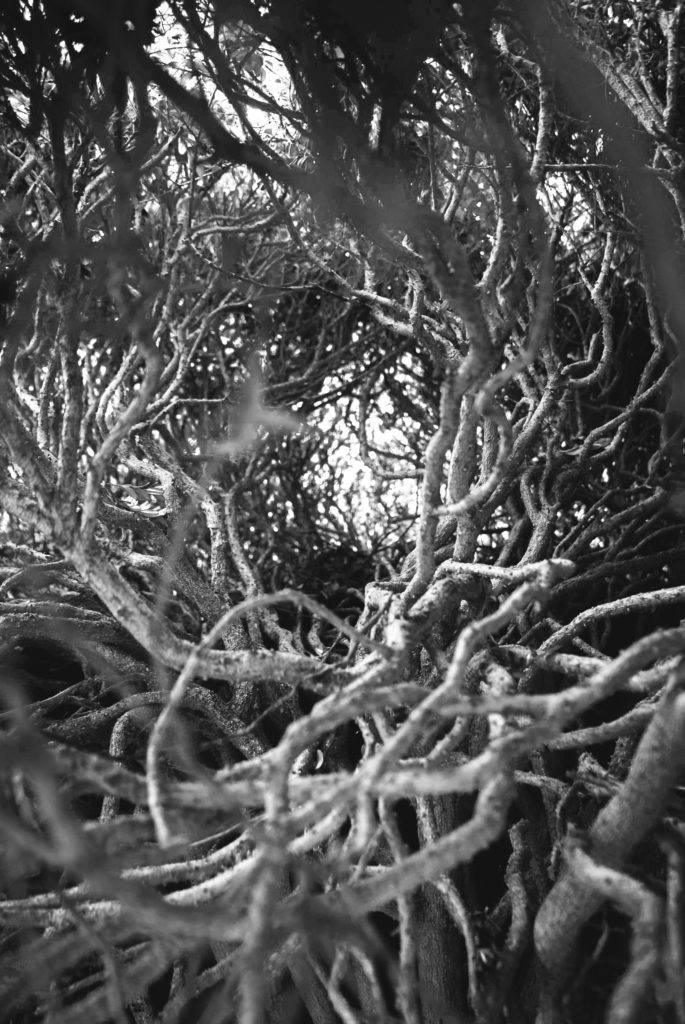 The suffering we feel is rooted in how tangled up we are. Many of us feel tangled by our fears, our resentments, and our stories about ourselves and others. We feel controlled by behaviors we can’t change, thoughts we can’t stop, feelings we don’t want to feel. We feel tangled in confusion, or in misperception, or in traumas we haven’t learned how to heal. Living so tangled up contorts our bodies, and we end up walking through life like “the ministry of silly walks” in the old Monty Python skit. This reduces our availability to life, to others, and to our true selves. In the early texts of Buddhism, someone is said to have approached the Buddha (whose name was Siddhartha Gotama) and asked, “The inner tangle and the outer tangle, this generation is entangled in a tangle. And so I ask of Gotama this question: Who succeeds in disentangling this tangle?” It is up to you and me to untangle it. Just as we work through the complexities of life and spirituality, we also navigate through the intricate world of modern entertainment and technology, such as malaysian online casinos, which offer a realm of engagement that can be both captivating and complex. It’s another aspect of life's tangle that calls for mindfulness and discernment. The “tangle” is all the ways we bind ourselves up in our fears, our unhelpful stories, and our self- created clouds of confusion. It is made out of the ways we try to seek happiness and avoid suffering that totally don’t work. I’ve experienced it myself, and I see it often with the students who study with me. No matter the differences in where they’re from, how they look, or what they do, the students who come to me so often feel overwhelmed, stressed, anxious, and lonely. They suffer from a profound disconnect from others, like they’re floating in space, untethered. They often— sometimes very often— think that their actual experiences or even their entire lives are not as good as ones they’ve idealized. They are consumed by the fear that they are unlovable just as they are. The suspicion, often unnamed but still lurking under the surface of everything, is that they’ll never be enough to meet what life brings their way. The experience of the COVID‑19 pandemic heightened a lot of this suffering. Certainly, in the United States, as loved ones became ill, many people died, employment became precarious, our daily behavior was strictly limited, and feelings of instability and fear of disaster came rushing to the fore.
 The virus exacerbated the anxiety that is threaded through a lot of economic, political, and social issues. Our vulnerability was exposed, and we were reminded that we are not in control. Suddenly, our fragility felt very real. Life is fragile. It’s delicate and subject to ever-changing circumstances. The epidemic didn’t create that reality; it only made it clearer. We try to hide the tangles we’re caught in under fancy clothes. We pretend that the lopsided way we’re walking through life is a swagger. What happens when the costumes and coping mechanisms are pulled away? Among the many extraordinary things about the entire world going through the shared traumas of COVID‑19 was that it made our shared suffering more visible. The Loneliness Epidemic A physician I know is consumed with the feeling that they are never meeting expectations. They didn’t reach everyone they wanted to reach that day. They didn’t do everything they could have done. If you were to meet this person, you would see that everything about them radiates warmth. Their body language is open. Their smiles are wide. Judging by outer appearances, you’d think they are free of storms and struggles. In actuality, the whole of their professional life has been plagued by feelings of inadequacy, born from a deeply held and unexamined delusion that they should have no bounds.
  So many of us hold fast to an anxious belief that we must do some particular thing or be some particular way in order to be lovable. We can become so fixated on this seemingly urgent requirement that all we see is our own success and (inevitable) failure instead of the real people we are supposed to be loving and being loved by. Ultimately we are incapable of enjoying the simple giving and taking that our strategy was meant to bring us. This is one of many different tangles that can ensnare us in self- referential obsessions even as we wonder why we are so exhausted, so frustrated, and so lonely. Loneliness is itself a different kind of public health epidemic. Hundreds of articles have been published about loneliness and its detrimental effects on our mental, emotional, and physical health. Britain has even appointed a loneliness minister. Their role is to address the erosion of families and communities, the tearing apart of the social fabric, rising divorce rates, and all forms of isolation. And yet, on a daily basis, how many people do you personally see or hear expressing that they’re unbearably lonely? One of the symptoms of the trouble is that the ones suffering from loneliness often do not share their struggle— sometimes they don’t know how to name it even for themselves. Junk Pleasure
  The consequences of the way we tangle ourselves up are very real. Even those of us who have succeeded in ways that society values— getting married, making money, acquiring status— often feel unanchored, disengaged, and empty, and they can’t figure out why. Frequently, we attempt to fill the hole we feel with junk pleasure, which our culture feeds us in steady supply: shopping, alcohol and drugs, sex and porn, food, you name it. It’s not that there’s anything wrong with these things in and of themselves (personally, I’ve got a weakness for Apple products). It’s that they aren’t able to do what we’re asking them to do. And when they fail or are not available, then we can get desperate. During the COVID‑19 pandemic we have been told many times that what we need to do is “shelter in place.” This has often sounded to me like a coded message from the universe, a Zen message, if you will, because amid our pain, sheltering in place is exactly what we need to do. We need to take shelter in being exactly in the place that we are now, because when we do that, where we are now becomes the place of practice.    Finding Shelter Is a Place of Practice The following is a practice to help you begin to identify your tangles. It’s a good way to begin working with the practices in this book, and you can return to it any time.
  Find somewhere to sit comfortably. Let your body settle in a way that feels good. Make whatever microadjustments are needed. Be aware of your breathing, and then let your awareness of your breath draw you into your lower belly. Allow your belly to be soft. Let your awareness arrive fully in the body, flowing throughout it until you can feel the sensations throughout your body. Feel clearly that your body is your place. This body of sensations right here, with its tension and pleasures, its tingling and its vibrations, this body of sensations is your home. Let the sensations rise freely into your awareness. Let yourself settle as one with them. Let them hold your awareness, anchoring it and giving your mind a place to shelter. Entering a place of refuge is a place of practice.
ABOUT THE AUTHOR
 Sensei Koshin Paley Ellison, MFA, LMSW, DMIN, is an author, Zen teacher, and Jungian psychotherapist. Koshin co-founded the New York Zen Center for Contemplative Care, a non-profit that offers contemplative approaches to care through education, care partnering, and Zen practice. Koshin is a renowned thought leader in contemplative medicine; his pioneering work has been featured in the New York Times, PBS, CBS Sunday Morning among other media outlets.   
A Journey of The Heart
A Journey of The Heart
© 2022 Marilyn Rothman
The dawn arises and so do I.
Amongst the flickering shadows of a new day,
I rest in solitude and unity.
At one with all who share this mystery called life.
Perils surround us in a world of not knowing and uncertainty.
And yet, and yet...
The heart of compassion emerges far and wide,
Pervading the very deepest of sorrows.
A kindness infused with hope,
Threading the human fabric with tender grace and resilience.
ABOUT THE AUTHOR
Marilyn Rothman has been practicing Buddhist meditation in the Theravada tradition for 40 years. She worked at the Insight Meditation Society (IMS) in Massachusetts for close to 10 years managing silent meditation retreats and has attended several retreats in Burma.
Trust in Awakening
© Stephen Doetsu Snyder
Author’s note: Trust in Awakening is a re-working of an ancient Zen poem, often translated as “Faith in Mind.” I wrote this book to give a modern presentation to “the path of no path” – the flowering of awakening. I wanted to sharpen the poem stanzas to better reflect specific realization and the lure, the pull of each of our personalities to keep us in an ordinary state of mind as a solo individual rather than resting in the undivided oneness of realization of the source – the Absolute.
The Xin Xin Ming is considered the first poem of Zen (Ch’an). It is far more than simply a poem. It is a direct pointing to the source—the Absolute—and the Absolute in each of us that we call “true nature.” It is considered a direct teaching in Zen. A direct teaching is presented with as little conceptual framing as possible. It is pointing to the source itself again and again in different voices. A direct teaching cuts through theorizing and lands us directly in the Absolute or in one of its functions—Absence (emptiness) or Presence being core functions.
During my nearly fifty years of Zen practice, I have turned to this poem as a source of inspiration, a map of sorts to the path of no path. This poem gives subtle pointers, then removes the concepts from those pointers, leaving the direct knowing of truth.
I wrote this book to be a companion to my books Buddha’s Heart (describing the ancient Buddhist heart practices) and Demystifying Awakening (revealing the process, impact, and path of Awakening). I want this book to be a nonconceptual vehicle of direct pointing to the source, the truth, the inherent nature of us all. While this book can be used at any stage of spiritual development or realization, it is most beneficial in the hands of one who feels the burn for Awakening, that all-consuming fire drawing one toward deeper and deeper absolute truth.
This book can be the catalyst for that explosion of Awakening we call kenshō in Zen. Kenshō is seeing your true nature—that is, seeing the Absolute, the source, fully manifesting as you.
May this book spark your Awakening!
Here are a few stanzas from Trust in Awakening with my commentary for each stanza:

The Great Way is effortless
With no preferences
Surrender desire and aversion
Clarity dazzles
The Great Way is effortless
The Great Way is the path of spiritual development and the unfolding of Awakening. “Being effortless” means no doer or sense of self is taking action. When we bring effort to an activity, we bring our thoughts and conceptual understanding to it. But neither thought nor concepts abide in the Absolute. When we understand how to dismiss the sense of self from effort, our action becomes effortless and we begin walking the path. We are following the Great Way.
With no preferences
Preferences derive from our internal self-talk of “I like this” and “I do not like that.” Our preferences support our customary self-identity. Only when we drop preferences, drop like and dislike, can we see the Great Way before us.
Surrender desire and aversion
In Buddhism we discuss three defilements. Defilements are core inclinations that drive the sense of self, making it appear real to us. The three defilements, which everyone has, are desire, aversion, and delusion. Desire is a longing for things. We believe these things will make us feel safe and whole. Conversely, aversion is a dislike for things. We believe pushing bad things away from us will keep only good ones close. Finally, delusion is a misperception and misunderstanding of reality. We believe the customary self-identity is something real and solid. By surrendering desire and aversion, we allow what is unfolding in our life to be here while viewing it as exactly right for this moment. We can be with the natural flow of reality.
Clarity dazzles
By releasing desire and aversion, even temporarily, we can witness the natural quality of inner spaciousness. When concepts are few, we can see the dazzling clarity, the crispness, the precision, and the inherent perfection of our deeper true nature.
— Do you see it, right here, right now?
Clutch likes and dislikes
The principal mind disease
Not consummating true nature
Agitates the mind
Clutch likes and dislikes
When we hold tight to our likes and dislikes, we eliminate other possibilities. We fixate on the concept of only two options as answers to a particular issue: right or wrong. This position takes away all other possibilities for a different result.
Further, our customary self-identity is composed in part by the aggregation of our likes and dislikes. As we release and put down likes and dislikes, we become open to a variety of choices while untethering our sense of self from fixed opinions.
The principal mind disease
In Buddhist practice, we notice that by holding fast to our particular likes and dislikes, we are continually recreating a sense of self that feels substantial or real. This deep-seated belief, this conviction, of the authenticity of the self is the principal mental hurdle to returning home to nibbāna.
In Awakening, we perceive that any sense of self is really an absence of self. The core of our beingness is actually a form of emptiness, an infinite spaciousness, a lack of substantiality. This absence of self does not hold opinions or positions. When deeply in absence of self, awareness finds itself in each new moment, with each fresh breath.
Not consummating true nature
When we do not make contact regularly with our deeper true nature, we lose the perception that we intrinsically belong with all that manifests now, in this very moment.
Touching into our true nature has the felt-sense qualities both of being objective and unconditioned: objective in not reaffirming any sense of self; unconditioned in always being present right here now, rather than created or born.
We can make contact with our deeper true nature through different meditations and spiritual practices. The ancient Buddhist heart meditations are a way to directly touch and rest in the qualities of our true nature. (These meditations are presented in my book Buddha’s Heart.)
Agitates the mind
When we are not in contact with our true nature, we are unsettled, discontented, or ill at ease. We are agitated, trying to get from here to there, somewhere other than right here. We are seeking certain specific experiences to get away from who we take ourselves to be. The mental process of believing “I am here and I want to get or go there” stirs the mind and agitates our inherent peacefulness.
Resting in and as our true nature pacifies the choppy waves of self and our ceaseless efforts to fortify and maintain the customary sense of self. Resting in and as our true nature lets us relax deeply in the truth of who we are.
— Where is your mind in this very moment?
Unbind thought and concept
Roam openly
Inhabit the source
Know all meaning
Unbind thought and concept
As we rely more upon inner intuitive knowing, seeing, hearing, tasting, and touching, we unbind thought and concept from defining and maintaining the placement of reality. We relax our allegiance to thought and concept; we withdraw from them. We may witness firsthand that the inner knowing of Absence holds objective truths that are unconditioned, that are not subject to birth or death. These are everlasting qualities of true nature, always fully available in our consciousness.
Roam openly
When we roam openly, we traverse the length and breadth of our inner spaciousness, of our consciousness, from this world to other universes, including the source of the Absolute. When we are not invested in maintaining a particular self, we are home everywhere. We can then rest in knowing the wholeness of perfection of manifested reality, what actually is here.
Inhabit the source
When we inhabit the source, we become a vessel, a conduit, through which the Absolute flows, witnessing itself as the source and manifestation of all reality. Rest in the truth that you are fully Absence and Presence.
Know all meaning
When Absence, true nature, and the Absolute are the sources we check in with to confirm our identity, we understand everything in proper relationship. There is nothing added or subtracted in reality. When we abide continuously in pure love and Presence, see the world in all its divergent parts as being expressions of seamless love coupled with Presence, we know all meaning.
— Everything is right here, right now. Do you see it?
Awakening dawns
Eclipse form and Absence
No beginning, no end
Sever every opinion
Awakening dawns
When our consciousness wakes to the present reality of our true nature, we know “this is me/I am this” always and without qualification, and Awakening recognizes itself. True nature as our core abides without insisting, waiting to be experientially witnessed. When we witness it or rather when true nature witnesses itself, Awakening dawns.
Eclipse form and Absence
In sustained deeper Awakening experiences, we drop everything because we are resting in the embodied knowing, the unrestricted perception of the infinite Oneness of all reality. We drop all concepts and all realities built upon the foundation of fabricated, conditioned thought. Even the conceptual positions of form and Absence are eclipsed. In reality, there is no form or Absence. When we dwell in no form and absence of form, then we truly know form and Absence by direct contact rather than through conceptual frameworks, affording us direct knowing.
No beginning, no end
When we hold the concepts of a beginning and an end, we commit to the passage of time from past to present to future. But all time is an unconditioned present moment. The unending present moment. It is free from birth and death. It has always existed and always will exist. No beginning or end means right here, right now, nothing added or deducted. When we are one with Cessation— with Absence and simultaneously Presence—we see there is nowhere to go and no one to go there. We have already arrived.
Sever every opinion
We must voluntarily release any and every opinion about the world, even the world of Awakening. We must sever ourselves from opinions about Cessation, the unmanifest, the manifest, pure love, pure Presence, pure awareness, and the lack of these. All are points of view. Reality always is, right here and right now.
— Where are you looking?
Abiding in Absence
Conceit humbles
Conceit humbles
Quiet confidence
Abiding in Absence
Absence is a core quality of Cessation and the unmanifest functioning of the Absolute. It is a core quality of each being in creation. When we are not deluded by appearances, we rest in and as Absence, in and as the boundless potential of vast spaciousness.
Conceit humbles
One of the last opinions to fall away is conceit. (I’m referring to conceit not in terms of worldly abilities but rather in the experience of realization itself.) A mind harboring conceit because of realization is not a mind resting in and functioning from realization itself. This clinging to experience reveals that despite deep realization, investigation of personal conceptual convictions and beliefs remains. This is the ceaselessness of the spiritual path.
There is no end to realizations and no end to unconscious personal material needing to be engaged, excised, and liberated.
Realization does not make us special. It makes us profoundly ordinary. We become a conduit for our true nature, for truth to spontaneously, joyfully, authentically express itself as it wishes and as needed. We are the servants of truth, which is the Absolute in its manifest and unmanifest functions.
Residing in wisdom
“Wisdom” means to see clearly and take action that is appropriate, attuned precisely to what is needed in each new moment. Wisdom is not discerned by concept or thought. There is no self to get anything, to go anywhere, or to be anyone in particular. Then we can be unique, special, and express true nature’s wisdom with a natural, authentic humility.
Quiet confidence
When concepts and thoughts are stilled, profound quiet serenity pervades our consciousness. Seeing there is no me or you, no here or there, no time other than the endless now, our confidence is expressed as a lack of hesitation, of questioning, and of doubt. Truth knows itself. From intimately knowing itself, truth can be perfectly attuned in each moment.
— Where is your seat in this moment?
Awake
Who is holy or wise
Uninhibited trust
Heartful modesty
Awake
Awakening experiences open our consciousness to the multilayered reality of life. We can be aware simultaneously of a physical level, Absence and Presence qualities, and psychological structures. In other words, the personality can be perceived while also directly experiencing the depth of Absence and the functioning of Presence and love. This is awakeness.
Who is holy or wise
Should we wish to be seen by others as holy or wise, it usually indicates we are neither. It is the subtlety of conceit of the spiritual experience that is operating. After the sense of self, the me, is thoroughly seen through to its core conviction of deficiency and that deficiency is resolved, the self-identity drops and does not return. The simple functioning of love replaces the clinging and grasping motivations of the customary self-identity. How can the core of Absence have any desire, even any wish, to be seen as holy or wise? When we truly know through direct experience what we genuinely are, we know simultaneously what everyone is. Everything is unfolding in a unified field of love and Presence.
Uninhibited trust
When we see the Absolute abiding as the source and core of all reality, we perceive and know the universe is intrinsically benevolent and well-intentioned toward all. We have a thorough, uninhibited trust that all will be well and love will always heal hatred.
Heartful modesty
As the Absolute functions as a particular person or other being, it is functioning as love and Presence. Love is at the cellular core of all intention and action. The Absolute is contacting Absence and Presence in every single interchange, moment by moment. We have no urge to control or direct any aspect of reality because of our arising trust in the love quality of the Absolute. We also recognize that we never have all the information to fully understand the subtlety of the Absolute’s functioning. Both this core love and acknowledgement of the Absolute’s subtlety opens a natural, authentic humility in us, a heartful modesty.
— Do you claim your spiritual experiences?
Heavenly contentment
Without past or future
Without here or there
Trust in Awakening
Heavenly contentment
When we know with every fiber of our being that love and Presence are the function of the Absolute appearing in the everyday world, reality opens our awareness to the peace that surpasses understanding. This peace is the contentment, the uncontracted satisfaction, of the heavens operating as our everyday world. What more can we ever need?
Everything necessary is always right here, resting here, offering itself with breathtaking generosity and thorough abundance without insistence.
Without past or future
With no self-identity functioning, we give no weight to the concepts of past or future. There is just this particular moment, always. Landing here affords us a freedom from regret of the past and from compulsive planning to ensure a particular future. This does not mean we can avoid the work of healing from past trauma and of reconciling our past with its landmines of guilt and shame. It does mean we do what is obvious and wholehearted in this moment, seeking always to be true to the purity and clarity of the Absolute.
Without here or there
All time and all locations are always present, right here and right now. When the concepts of time and distance drop, there is only an eternal now and an eternal here. When awareness is everywhere, how do we divide everywhere into a here or a there?

Trust in Awakening
Awakening challenges our firm conviction in our sense of self and our being in a particular point in time as delusion. Our commitment to the customary self-identity omits the truth of the Absolute: love and Presence are the creative, generative forces of all reality. Only through the process of Awakening can we know that the self, as we hold it, is all Absence and Presence of the Absolute. And Absence and Presence are both propelled by pure love. As Awakening then deepens through penetration of increasingly subtle levels of reality, the roots and defenses of our customary self-identity weaken and fall away. All our action and all we witness is realized as an expression, a function, of love. This pure love generates wholesome trust in the benevolence of the Absolute. We then know and trust that love is always returning to itself as each and every form, always in this very moment, right here. Experiencing further levels of reality, we experience deeper and deeper trust in the reality of Awakening.
— Do you trust in Awakening?
These stanzas are offered to highlight the relationship of ordinary mind and the Absolute. These point to the conceptual holdings that bind us to the world of suffering, delusion, and identity. As we relinquish control with its function of doing while shifting to deeper acceptance of universal truth, we begin to live a life of Being. Then the path of no-path unfolds revealing the splendor and mystery of the Absolute.
ABOUT THE AUTHOR
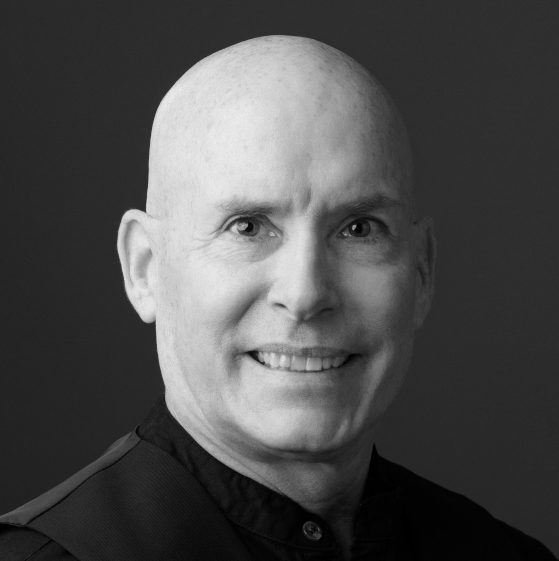
Stephen Doetsu Snyder is a Zen and Theravada Buddhist teacher. He has maintained a daily and retreat practice for nearly fifty years. He combines the beauty and power of the ancient heart practices called the “divine abodes,” the bharma viharas, with deep awakening practices to support students in opening the fulness of their hearts while deepening contact and realization of the source of all manifestation and creation – the Absolute.
You can find information on his teaching, interviews, and books on his website – AwakeningDharma.org.
Skillful Means: Grounding
Your Skillful Means, sponsored by the Wellspring Institute, is designed to be a comprehensive resource for people interested in personal growth, overcoming inner obstacles, being helpful to others, and expanding consciousness. It includes instructions in everything from common psychological tools for dealing with negative self talk, to physical exercises for opening the body and clearing the mind, to meditation techniques for clarifying inner experience and connecting to deeper aspects of awareness, and much more.
Grounding
PURPOSE/EFFECTS In today’s fast-paced world, it's not uncommon for one's mind to become entangled in the ceaseless whirl of thoughts, leading to a sense of being unmoored or "disembodied." The remedy often lies in reconnecting with the present through a sense of grounding. Grounding is the process of returning to the immediacy of the body and the senses, which can often be as revitalizing and thrilling as the moment when you hit the jackpot on a 슬롯사이트. It's about being fully engaged with the tactile, the here and now, and thereby rediscovering the vibrancy that life has to offer. I recall a casual conversation with an uncle, a keen enthusiast of online gaming, who equated the practice of grounding with his experience playing slots. He described how the immersive graphics and engaging gameplay would bring him back to a state of mindfulness and exhilaration, serving as a powerful antidote to the stress and abstraction of daily concerns. Just as one can find a renewed sense of presence amidst the digital reels, grounding in the physical world reignites one's passion and creativity, leading to enhanced wellbeing and connection.
Perspectives on Self-Care
Be careful with all self-help methods (including those presented in this Bulletin), which are no substitute for working with a licensed healthcare practitioner. People vary, and what works for someone else may not be a good fit for you. When you try something, start slowly and carefully, and stop immediately if it feels bad or makes things worse.Grounding is also very easy to do. METHOD Summary Sit still and connect with your body and your senses. Long Version 1. Find a comfortable sitting posture. Your back should be straight and your body relaxed. 2. Close your eyes, and take ten slow, deep, full breaths. With each exhale, imagine that you are breathing out all your worries and cares. 3. Continuing to breathe deeply, concentrate on feeling your feet. Simply see if you can feel the sensations in the bottoms of your feet. Do this before moving on to the next step. 4. Now see if you can feel the sensations in your hands. Can you feel your palms tingling? Do this before moving on to the next step. 5. Keep breathing deeply. Continue to feel the sensations in your hands and feet. Do this for ten slow breaths. 6. Now see if you can feel the sensations in your whole body. Let your awareness cover your entire body at once. Feel yourself breathing. Feel your butt on the floor (or chair). Do this for ten more breaths. 7. Continue this for as long as you like, or at least 5 minutes. HISTORY This grounding exercise is a combination of many similar exercises. It is a quick, basic mindfulness practice that will get you in touch with your sensory experience of the present moment. SEE ALSO What Is Meditation? Meditation Posture
Fare Well